Awami League Funding and Fueling Garment Workers' Unrest; 11 Leaders and Activists Arrested
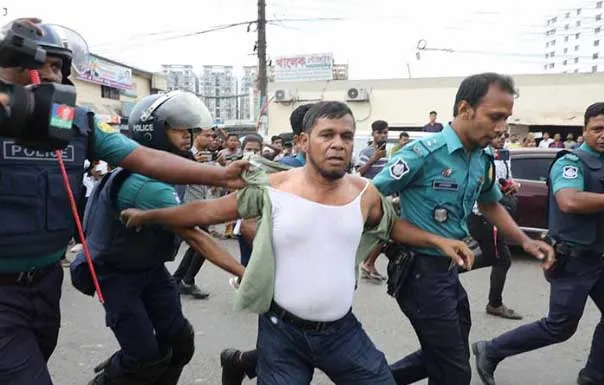
Widespread chaos, vandalism, and clashes have erupted across Mirpur in the capital, as well as Savar and the neighboring district of Gazipur, centered around garment workers' demands for a revised minimum wage. Although law enforcement agencies were deployed to control the situation, sensational information has emerged regarding the direct involvement, funding, and sabotage attempts by leaders and activists of the banned Awami League and its associate organizations.AL Funding, Incitement, and Government ResponseFollowing the ongoing unrest in the readymade garment (RMG) sector, Prime Minister Tarique Rahman chaired an emergency meeting with key government policymakers and ministers at the Secretariat.Speaking to reporters after the meeting, Labor Minister Ariful Haque Chowdhury stated, "A minimum wage board has already been formed in accordance with the workers' demands. The continuation of this chaos despite that clearly proves elements of Awami fascism are engaging in these destructive acts with an eye on December." He added that the government would address the issue politically.In a separate press briefing, Home Minister Salahuddin Ahmad remarked, "Innocent garment workers are being used, with incitement and funding coming from across the border to create instability in the country. Masked individuals have infiltrated this violent movement."11 AL Leaders and Activists Arrested for Sabotage AttemptsFollowing incidents of violence, vandalism, and the setting of a police vehicle on fire during the protests in Mirpur, the Detective Branch (DB) of the Dhaka Metropolitan Police conducted raids and arrested 11 leaders and activists associated with the Awami League and its affiliate bodies.Mohammad Rakib Khan, Deputy Commissioner (DC) of DB Mirpur Division, confirmed that the arrestees face allegations of inciting ordinary workers from behind the scenes and gathering crowds through financial backing. Those arrested include:Shramik League Leader: Md. Kamal Gazi (Joint General Secretary), accused of hiring people with money and inciting vandalism.Juboleague Activist: Md. Ramzan Sarkar.Awami League Activists: Md. Oliullah Onik (active member and picketer), Alif Hossain Imon, Md. Nahid Hasan, Arif Akond, Zayed Karim Riaz, Moazzem Shahria Niyaz, Zubayed Islam Zishan, and Md. Mahim Molla.Additionally, police reported that evidence, including video footage on social media, shows several leaders of the banned Chhatra League—including Sajbul Islam, Organizational Secretary of the Jagannath University Chhatra League unit-actively chanting slogans and inciting violence on the field.
Trending Analysis
LIVESC stays HC orders barring shown arrests without specific allegations

ট্রান্সকমের ১২০ কোটি টাকা ভ্যাট ফাঁকির অভিযোগ ভিত্তিহীন

S&P revises Bangladesh outlook to negative

Onion growers breathe easier as prices rebound

National & Politics
View All →
Foodpanda Bangladesh incurs €111 million losses since 2016
Foodpanda Bangladesh’s losses rose 40 percent to €11.76 million last year, extending a losing streak that now stretches back a full decade, according to parent company Delivery Hero’s annual financial statements.

Presidential election: EC to meet acting Speaker tomorrow
The full Election Commission, led by Chief Election Commissioner (CEC) AMM Nasir Uddin, will meet acting Speaker Kayser Kamal tomorrow to discuss the upcoming presidential election.

BB issues guidelines to link local banks with foreign payment providers
Bangladesh Bank has introduced a bank-intermediated framework to link local banks with foreign payment providers, modernising the payment ecosystem, boosting digital financial inclusion, and supporting the growing trade in services.

Technology cannot compensate for the missing trust in land offices
Ask anyone in Dhaka who has tried to transfer a plot of inherited land what the hardest part was, and the answer will be: the paperwork. A family sells a parcel, signs the deed, pays the registration fee, and then discovers the real ordeal is still ahead: getting the khatian (record of rights) updated to reflect the new owner. This second step, called mutation, is where months disappear, where “processing fees” gradually turn into bribes, and where a legitimate transaction can stall for reasons no one will put in writing.
Capital markets gain momentum following the central bank's updated monetary policy guidelines and targeted export incentives.
Business & Economy
View All →
Reports of Tk 120cr VAT evasion by Transcom unsubstantiated
3 months ago
Awami League Funding and Fueling Garment Workers' Unrest; 11 Leaders and Activists Arrested
2 weeks ago

Salinity’s silent intrusion
3 months ago
Technology cannot compensate for the missing trust in land offices
3 months ago
Lifestyle & Perspective
View All → 3 months ago
Madhupur pineapple prices crash as rain, flood dampen demand
Pineapple farmers in Tangail’s Madhupur upazila are selling this season’s harvest at a loss, as prices for the GI-certified fruit have collapsed at the peak of the season.
3 months ago
Presidential election: EC to meet acting Speaker tomorrow
The full Election Commission, led by Chief Election Commissioner (CEC) AMM Nasir Uddin, will meet acting Speaker Kayser Kamal tomorrow to discuss the upcoming presidential election.
 3 months ago
Who writes the history of the July Uprising?
Every mass uprising has two histories. One is written in the language of power; the other is preserved in the memories of the people who lived it. The first is established quickly, as states, governments, or newly empowered political actors construct a narrative that legitimises their authority. The second emerges more gradually—from eyewitness accounts, organisational records, news reports, and the lived experiences of those who occupied the streets. For that reason, the struggle that follows a popular uprising is never confined to control of the state. It is also a struggle over political memory. Those who seek to consolidate power often attempt to monopolise that memory, reducing a complex collective experience to a single official story.
Education & Career
View All →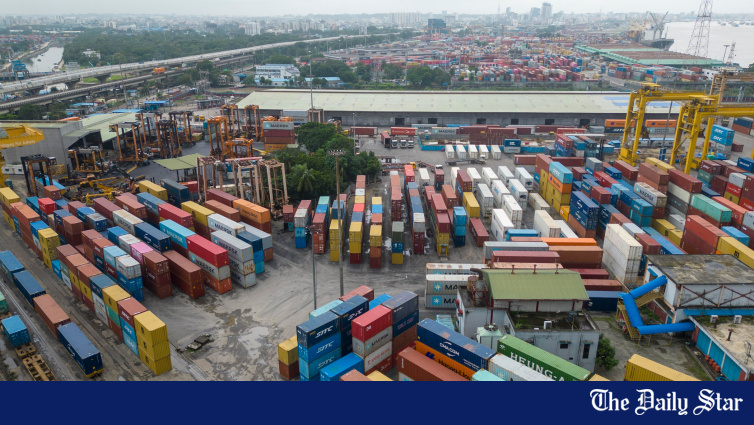 3 months ago
Chattogram port’s empty-container problem needs more than quick fixes
A recent dispute over empty containers at Chattogram port has brought to renewed focus a deeper problem in Bangladesh’s trade logistics system: when legitimate interests collide, there is no neutral, technically competent authority to resolve the situation.
3 months ago
Who writes the history of the July Uprising?
Every mass uprising has two histories. One is written in the language of power; the other is preserved in the memories of the people who lived it. The first is established quickly, as states, governments, or newly empowered political actors construct a narrative that legitimises their authority. The second emerges more gradually—from eyewitness accounts, organisational records, news reports, and the lived experiences of those who occupied the streets. For that reason, the struggle that follows a popular uprising is never confined to control of the state. It is also a struggle over political memory. Those who seek to consolidate power often attempt to monopolise that memory, reducing a complex collective experience to a single official story.
3 months ago
Foodpanda Bangladesh incurs €111 million losses since 2016
Foodpanda Bangladesh’s losses rose 40 percent to €11.76 million last year, extending a losing streak that now stretches back a full decade, according to parent company Delivery Hero’s annual financial statements.
 3 months ago
Beyond guava: The rise of hog plum in Bangladesh's floating orchard belt
For generations, guava has defined the identity of Nesarabad's floating market in Pirojpur.
Tech & Innovation
View All → 3 months ago
Unlocking the full potential of Bangladesh's national laboratory institute
When a physician prescribes treatment, almost every clinical decision depends on one fundamental assumption—that the laboratory report is accurate. An incorrect laboratory result can lead to misdiagnosis, inappropriate treatment, delayed intervention, unnecessary healthcare costs, and even preventable deaths. Modern healthcare, therefore, relies on laboratory medicine not merely as a support service but as the foundation of safe and effective clinical decision-making.

The future of the Bangladesh-China-Myanmar Economic Corridor

Our digital evidence framework must evolve with AI

Gazipur Agricultural University wins patent for jackfruit seed nutrition technology

Gas crisis strikes paracetamol API, other industries

Politics and religion has now gotten mixed with support for WC team: Kazi Sabir
Culture & Entertainment
View All →
Presidential election: EC to meet acting Speaker tomorrow

Chattogram's listed 'top criminal' David Emon arrested in Jashore

China's industrial profit growth moderates as exports cushion uneven recovery

The narcotics trail: Traffickers tap 105 border points across 18 districts
Health & Wellbeing
View All →
Rain, floods damaged crops worth Tk 478cr
Hanif Chowkidar, a farmer in Patuakhali’s Galachipa upazila, had planned to cultivate Aman paddy on 5.26 hectares this season. He spent around Tk 22,000 on four maunds (1 maund = 37.32kg) of seed and prepared a seedbed.
China's industrial profit growth moderates as exports cushion uneven recovery
Profits at China's industrial firms grew at a solid, though slower, pace as resilient exports helped cushion sluggish domestic demand, highlighting the economy's uneven recovery despite policymakers' efforts to spur consumption.

‘Every child has the right to be taught by a properly trained teacher’
Samir Ranjan Nath, programme head at the BRAC Institute of Educational Development, BRAC University, talks with Naznin Tithi of The Daily Star about the persistent learning gaps in primary education, the need for properly trained teachers, teacher redistribution, and other issues.